Morning Body, Night Mind2025-12-06

I’ve never considered myself a night person, and I get sleepy easily. Still, I’ve always found it easier to focus on studying and tasks at night. I’ve wondered about this for a long time, and I think I finally understand why.
It’s not really about being a morning type or a night type. I’m simply bad at handling multiple tasks in parallel. When I have two tasks that should each take only a small amount of effort—say, 10%—I somehow feel as if they require 50% instead of 20%. For example, when I try to study during the day, the washing machine might be running, the bath might be filling, or I might have plans later in the evening. Even small things I need to think about can lower my concentration more than they should.
At night, on the other hand, there’s nothing scheduled after, and everything for the day is already done. There’s nothing running in parallel in my mind, so I can focus much more easily. I’m not a night owl, but the absence of competing thoughts at night seems to push my performance higher.
During the day, I also tend to think, “There’s still plenty of time left, so I can relax a bit,” which makes it easier to drift. Because of all this, I’ve ended up as someone who is technically a morning person but performs better at night.
Winter Coming2025-12-02

I’ve stepped into December. People often say the change of seasons makes you more prone to getting sick, and sure enough, I caught a cold. It’s only a mild fever, but it’s still rough. I usually come down with something about twice a year, so if I live another fifty years, that probably means around a hundred more colds to go. Maybe that’s about the same number of times I’ll end up taking a flight in the rest of my life.
Lately the days feel too short, which I’m not really fond of. In summer it stays bright until around seven, but now it’s already dark by five. Longer daylight makes me feel lighter, maybe even a bit more energetic. When I went to Mongolia the other day, the sun was still out around nine, and the days felt incredibly long. I like protecting my sleep schedule, but I still wish the sun would stay up until at least eight.
This ended up sounding like idle muttering, but diaries are meant to be that way, so it’s fine.
Getting Back on Track2025-11-30
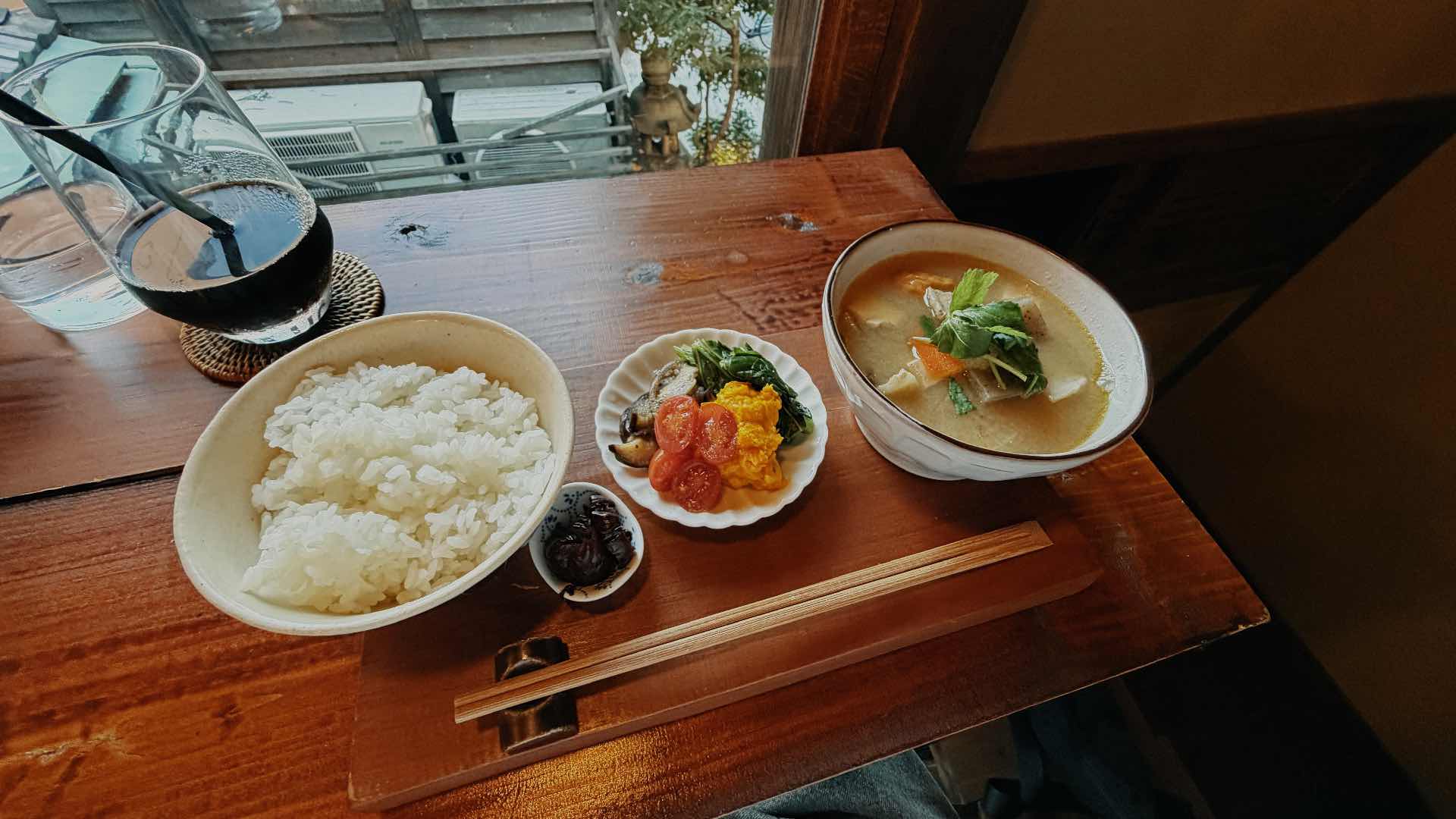
After two months, I’m finally writing in my journal again. Whenever my life goes through a period of change, I tend to lose track of the routines I had been steadily keeping up with. Recently, I started living on my own for the first time, and the shift in environment was bigger than I expected. I probably could have kept writing, but I just didn’t have the mental room for it.
Because of that, I also stopped doing the things I had been consistently working on—studying English, working out, reading. Now that I’ve gotten used to living alone, I’m gradually trying to get everything back on track.
I enjoy stepping into new environments, but I want to get better at adapting to them.
When to Bend, When to Stand2025-09-29
When I socialize, I feel drained both when I try too hard to adjust to others and when I try not to adjust at all.
Basically, I don’t dislike spending time with people—I actually try to surround myself with those I feel comfortable with. But if I focus only on the part of me that struggles with social interactions, this is what it looks like.
The hardest part is drawing the line between when to go along with others and when not to.
When I see people who seem to live firmly by their own principles, it looks like they’re living as the main character of their own story, and I find that cool. But no matter how independent they look, they still have to compromise with others at some point. Everyone has to decide for themselves where to draw that boundary.
In my case, I make that boundary based on pros and cons.
For example, if someone says, “You should read this book,” I weigh the downsides—like the time I’d lose or how awkward it feels to refuse—against the upsides, such as my genuine interest in the book or the chance to understand that person better. Sometimes I read it, sometimes I don’t.
In the end, what matters in most interactions is a mix of pros and cons tied to the relationship itself—things like “I want to know more about this person” or “It’s hard to say no.” These parameters—trust, liking, closeness—are what make drawing the boundary so difficult. Since every choice sacrifices something, that’s where I end up spending my energy in social life.
People sometimes tell me I’m “too accommodating,” while at other times they say I’m “detached.” Probably, the closer I feel to someone, the more the “I want to know this person” parameter grows, and the more likely I am to adapt to them—so it looks like I’m being overly accommodating. On the other hand, with people I’m not that close to, I must seem more distant.
Today’s writing feels like I just dressed up something obvious in fancy words, and I’m not that satisfied with it. It feels scattered, like my thoughts didn’t come together well. Compared to that, I really like the piece I wrote the other day, “A Change in How I Listen.” If you’re curious, I recommend that one.
A Change in How I Listen2025-09-27
Lately, I’ve noticed that I don’t feel annoyed by people bragging as much as I used to.
In the past, being around someone who bragged made conversations exhausting. But these days, unless it’s truly excessive, I actually find myself wanting to hear more. Of course, constantly meeting someone who brags all the time would still be tiring. But if it’s just someone at a drinking party or someone I happen to talk with for a night, it doesn’t really bother me anymore—I even feel like digging deeper into what they’re saying.
Reading this back, it might sound like I’m showing off—“Look at me, I can stay calm in situations that most people would find annoying.” And to some extent, that’s true. Maybe I do feel proud of being able to look at people from a different angle. But honestly, I also feel that I’ve genuinely started to see bragging less as bragging, and more as something else.
When talking to anyone, I believe they have plenty of qualities that surpass mine, and at the same time, I also have qualities that surpass theirs. Even Elon Musk or Steve Jobs, as great as they are, surely have areas where I’m better. Realizing this perspective has been a big reason why I no longer feel envy when someone brags. If someone is sharing something they’re proud of, it simply means they’re talking about one of their strengths. And I want to learn from or understand that strength. Meanwhile, I also have my own strengths, so I don’t feel the need to compare in a negative way.
Actually, I don’t even like calling it “bragging.” That word carries a negative tone. I’d rather call it “talking about strengths.” It feels more positive, and it better reflects what’s happening: someone is speaking with confidence about what they’re good at.
This way of thinking—“everyone has strengths I don’t, and I have strengths they don’t”—has helped me in many areas of life. It makes me feel less bitter and more at ease. Even if someone bumps into me on the street or shouts something rude, I can think, “Here, getting angry is their weakness, and ignoring it is my strength.” That perspective helps me avoid anger and stay focused on what I value about myself.
I think this mindset is one of the most important parts of who I am right now.
It’s Saturday today, and I ended up writing more than I expected. But since it was the first time I put these thoughts into words, I feel like I made good use of my day off.